



Published on August 28, 2026
A leak shows up, or a storm knocks a few shingles loose, and suddenly you’re staring up at your roof wondering what it’s actually going to take to fix it. Should you patch the problem, or is it time for something bigger?
Here’s a simple rule that can help before you even call anyone out: if repair costs would run more than 50% of a full roof replacement, replacement is almost always the better long-term move. That single number cuts through a lot of the guesswork in the roof repair vs replacement decision, but it’s not the whole story. Your roof’s age, material, and overall condition all factor into whether a targeted repair still makes sense or whether you’re better off starting fresh.
This guide walks through exactly how to weigh whether a repair or replacement is needed, what a roof inspection should tell you, and where insurance fits into the picture. By the end, you should have a clear, practical way to make this call, whether you’re dealing with a single leak or wondering if your whole roof system is on borrowed time.
The 50% Rule: A Simple Starting Point for Deciding on Roof Repair vs Replacement
The 50% rule is a common guideline contractors use to help homeowners think through repair vs replacement decisions. If the estimated cost to fix your current problem is more than half of what a full replacement would cost, you’re usually better off putting that money toward a new roof system instead.
Here’s why. A roof nearing the end of its life rarely has just one issue. If a contractor is already up there fixing one leak, there’s a good chance other areas are close behind. Spending thousands of dollars on a repair only to face another repair bill a year later isn’t unusual. Add those repair costs up over a couple of years, and you may end up spending more than a replacement would have cost from the start.
That said, the 50% rule is a starting point, not the final word. A five-year-old roof with one storm-damaged section is a very different situation than a 22-year-old asphalt shingle roof with the same damage. Age matters just as much as cost.
Signs Your Vancouver Home Needs a New Roof
Some problems are easy fixes. Others are signals that your roof system as a whole is wearing out. Here’s what tends to separate the two:
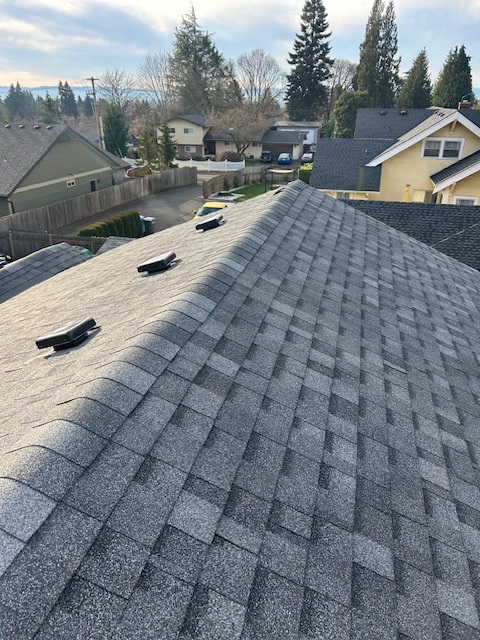
- Granule loss: A few granules in the gutter after a storm is normal. Bald patches on your shingles, or granules collecting in piles, means the shingles have lost their protective layer and are breaking down.
- Water staining: Stains on your ceiling or in your attic almost always mean water has been getting in for a while, not just after the last storm.
- Curling or cupping shingles: This usually shows up roof-wide, not in just one spot, and it’s a sign the shingles are past their useful life.
- Multiple repair calls in a short window: If you’ve called for roof repairs two or three times in the last couple of years, that pattern alone is worth a second look.
- Visible sagging: Any dip or sag in the roofline is a structural concern and should be looked at right away, not scheduled for “someday.”
If you’re only seeing one of these, a repair may still be the right call. If you’re seeing several at once, that’s usually a sign the whole system, not just one section, is reaching the end of the road.
How Long Should Your Roof Last in Vancouver, WA?
Roofing material plays a big role in when repair stops making sense. In the Pacific Northwest, where constant moisture speeds up wear, these are the age ranges we typically use as a guide:
| Roofing Material | Typical Lifespan in the PNW |
|---|---|
| Asphalt shingle roofs | 20 to 30 years |
| Wood shake | 25 years |
| Metal roofing | 40+ years |
A roof within its expected lifespan, showing isolated damage, is usually a good repair candidate. A roof at or past that range, even if it looks okay from the ground, is a much stronger case for replacement. Once an asphalt roof passes the 25 to 30 year mark, most repairs become short-term fixes on a roof system that’s already declining.
Roof Repair vs Replacement: A Side-by-Side Comparison
| Factor | Targeted Repair Makes Sense | Full Replacement Makes Sense |
|---|---|---|
| Roof age | Well within expected lifespan | At or beyond material age threshold |
| Damage scope | Isolated to one area | Spread across multiple sections |
| Repair history | First or second repair call | Repeated repairs in recent years |
| Repair cost | Under 50% of replacement cost | Over 50% of replacement cost |
| Water damage | None found during inspection | Present in decking or underlayment |
| Long-term plan | Staying 1 to 3 more years | Staying long term |
None of these factors decide things on their own. A roof that’s a little older but shows only minor, isolated damage might still be a smart repair. The goal is to look at the full picture, not just one data point.
What a Roof Repair Actually Costs Over Time
Homeowners often assume repair is automatically the cost-effective option, but that’s not always true once you look further out. Here’s a general five-year comparison for a mid-size asphalt shingle roof already showing some age-related wear:
| Repair Path | Replacement Path | |
|---|---|---|
| Year 1 | Repair cost for current issue | Full replacement cost |
| Year 2-3 | Possible additional repair calls | No major costs expected |
| Year 4-5 | Growing risk of interior water damage | Covered under material and workmanship warranty |
| 5-Year Total | Repair costs can add up close to replacement cost | One upfront investment, no repeat repair bills |
This is exactly why the 50% rule exists. A roof that needs $4,000 in repairs on a $9,000 replacement might be a reasonable repair. That same $4,000 repair on a $6,500 replacement is a much harder case to justify, especially if more repairs are likely down the road.
Does Homeowners Insurance Cover Roof Repair or Replacement?
This is one of the most common questions homeowners have, and the honest answer is that it depends. Sudden damage from a storm, falling tree limb, or wind event is often covered. Damage from age, wear, or lack of maintenance usually is not.
Here’s the part many homeowners don’t expect: some insurance policies won’t cover an aging roof at all, or they’ll only offer actual cash value instead of full replacement cost once a roof passes a certain age. Some insurers won’t renew a policy on a roof nearing 20 years old until it’s inspected or replaced. Whether homeowners insurance will cover roofing damage often comes down to timing. File a claim right after a storm and you’re in a much stronger position than filing months later, once an adjuster starts asking questions about long-term wear.
That’s one more reason not to wait until a small leak becomes a bigger problem. A roof inspection can help you understand where your roof stands before your insurance company brings it up first, and it gives you documentation to point to if a claim ever needs it.
Roof Repair or a Full Replacement? Let an Inspection Decide
The most reliable way to answer the repair-or-replace question is a professional inspection, not a guess from the ground. A trained eye can check for granule loss, soft spots in the decking, water staining in the attic, and flashing issues that aren’t visible from your driveway.
A roof inspection should always come before a decision, not after. It’s the only way to know whether you’re looking at a common roof repair or the early signs that your whole system needs to go.
An honest local roofer will tell you when a repair is genuinely the right call, not just recommend replacement because it’s the bigger job. And just as importantly, they won’t talk you into another round of patchwork when the roof has clearly reached the end of its service life. Getting that answer from someone with no reason to push you either direction is worth more than any online calculator.
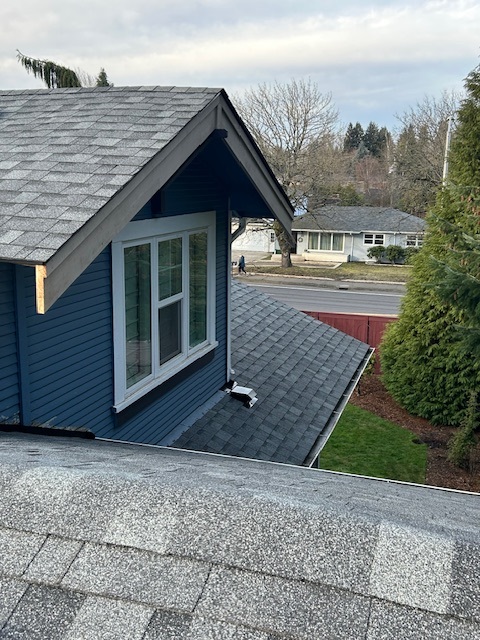
What to Expect From a Vancouver Roof Inspection
If you’ve never had a roof inspection done, it’s a lot less invasive than it sounds. A qualified roofer will typically:
- Walk the full roof surface, checking for granule loss, cracked or curling shingles, and damaged flashing around vents, chimneys, and skylights.
- Check the attic from the inside for water staining, daylight coming through the decking, or signs of poor ventilation.
- Look closely at valleys and edges, since these areas tend to fail before the rest of the roof does.
- Note the roof’s age and material to help estimate how much useful life is left.
- Put together a clear, written summary of what’s repairable now and what to plan for down the road.
A good inspection should take less than an hour for most homes, and it shouldn’t cost you anything to get an honest answer. If your roofer can’t explain exactly why they’re recommending repair or a full replacement, that’s worth a second opinion.
Roof Repair vs Replacement FAQs for Vancouver Homeowners
How do I know if I should repair or replace my roof?
Start with the 50% rule: if repair costs are more than half of a full replacement, replacement is usually the smarter long-term choice. From there, factor in your roof’s age, how many repairs you’ve already had, and whether the damage is isolated or spread across the roof.
What are the most common signs you need a new roof?
Granule loss, water staining on ceilings or in the attic, curling shingles, and repeated repair calls are the biggest red flags. One of these alone might still be a repair. Several together usually point to replacement.
How much does a roof replacement cost compared to a repair?
Roof replacement costs vary based on square footage, material, and roof complexity, but a full replacement is a one-time investment. Ongoing repairs on an aging roof can quietly add up to a similar amount over just a few years, without the benefit of a new warranty.
Will homeowners insurance cover roofing costs?
It depends on the cause. Sudden damage from a storm or fallen tree is often covered. Wear and aging typically are not, and some insurers reduce coverage or require an inspection once a roof passes a certain age.
How long does an asphalt shingle roof last in the Pacific Northwest?
Most asphalt shingle roofs last 20 to 30 years in our climate, a bit shorter than in drier regions due to constant moisture. Shake roofs run about 25 years, while metal roofing can last 40 years or more.
If you’re weighing repair or replace and want a straight answer instead of a sales pitch, Warner Roofing & Construction has been helping Vancouver and Portland metro homeowners make that call since 1992. We’ll never recommend a repair when your roof really needs a replacement, and we’ll never push a replacement when a repair will genuinely do the job. Our team offers honest roof repair assessments and full roof replacement services, backed by a real inspection every time.