


Published on November 9, 2026
When you find your roof damaged after a windstorm in Vancouver, WA or anywhere else in Clark County, one question usually comes before all the others: will my homeowners insurance actually pay for this? The honest answer is that it depends on what caused the damage, how old your roof is, and which type of policy you purchased.
Most Washington homeowners insurance policies will cover roof repair or replacement when the damage comes from a sudden event, like a windstorm or a falling tree, but they usually won’t cover a roof that simply wore out over time. Even when your claim is approved, the size of your check depends on whether your policy pays actual cash value (ACV) or replacement cost value (RCV).
This guide walks you through what’s covered, what isn’t, how ACV and RCV really work, and how to document your claim so you get everything you’re owed.
When Does Insurance Cover a Damaged Roof?
Homeowners insurance is designed to protect you from sudden, accidental damage, which insurers describe as a “covered peril.” If a covered peril damaged your roof, your policy will usually help pay to repair or replace it, minus your deductible.
In the Pacific Northwest, the most common covered perils for roofs are:
- Wind, since east winds through the Columbia River Gorge and winter windstorms regularly tear shingles loose across Clark County.
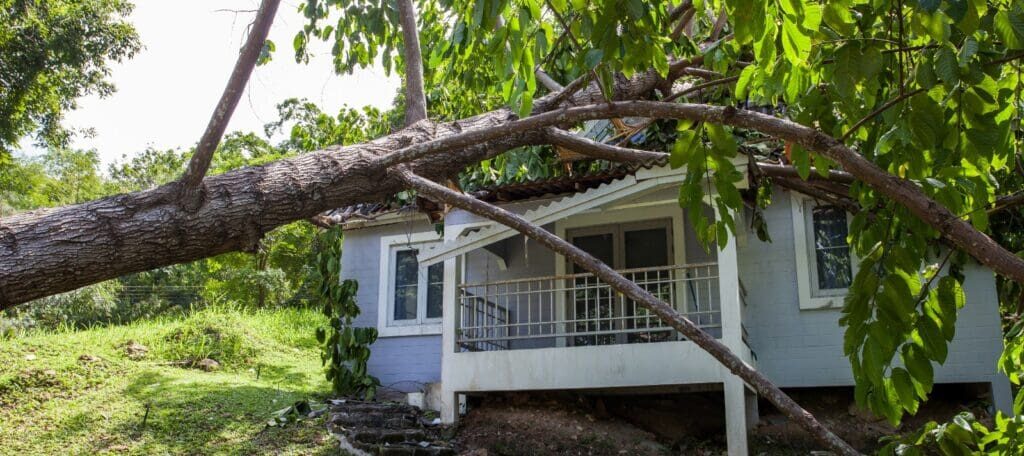
- Falling trees and limbs, because tall firs and heavy, waterlogged branches are a leading cause of sudden roof damage here.
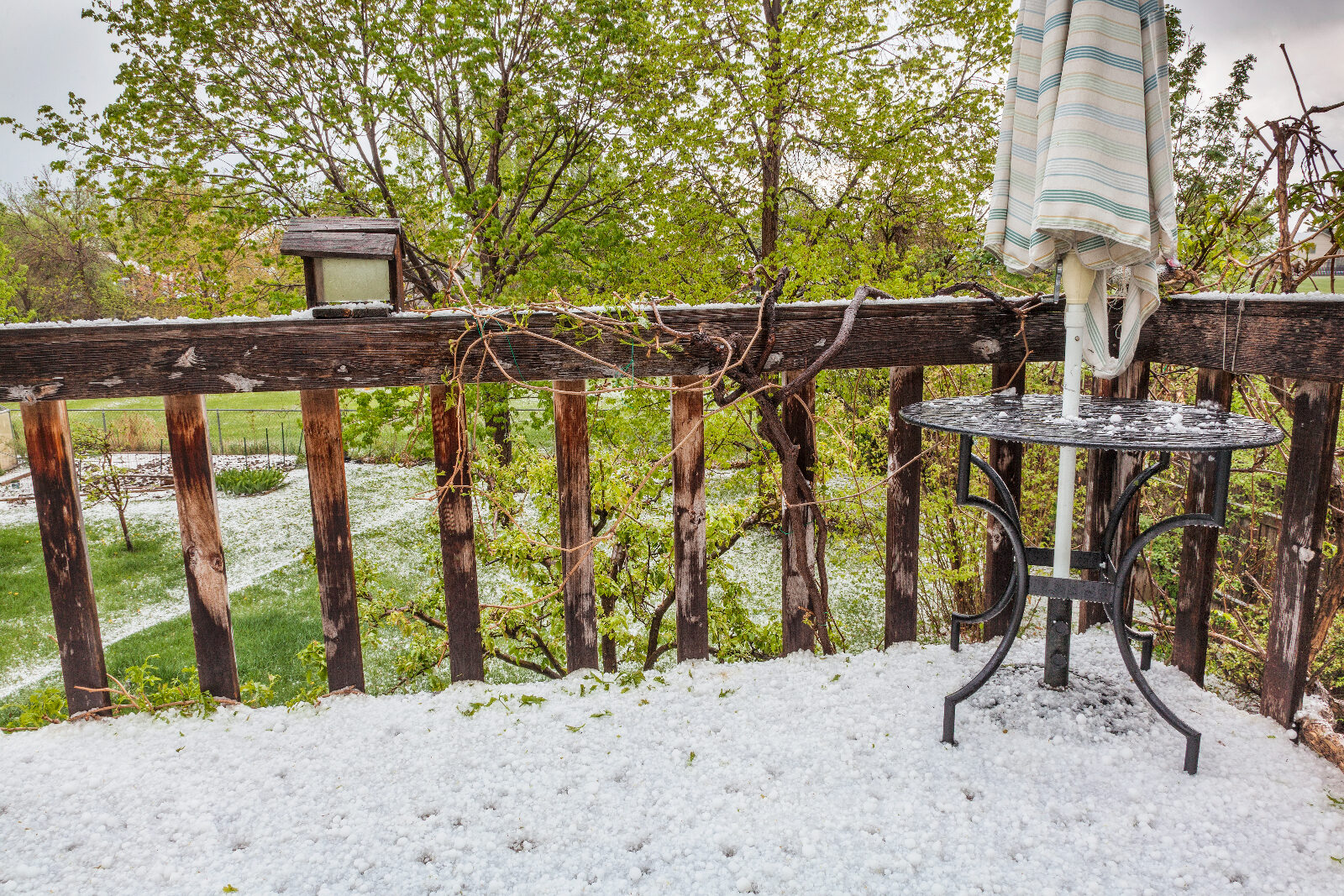
- Hail, which is less common here than in other regions, although spring hailstorms can still bruise or crack shingles.
- Snow and ice, when the weight of heavy snow or ice damages roofs during rare but serious winter storms.
- Fire and lightning, which are covered under nearly every standard homeowners policy.
The important word in all of these situations is “sudden,” because your insurer wants to see a clearly identifiable event, on a specific date, that caused the damage.
What Homeowners Insurance Usually Won’t Cover
Insurance isn’t a maintenance plan, so if your roof is failing because of age or a lack of upkeep, your claim will probably be denied. This is where many Washington homeowners get caught off guard, because our wet climate causes a lot of slow, gradual deterioration that insurers consider preventable.
Common reasons a roof claim gets denied include:
- Normal wear and tear, since shingles that are curling, cracking, or losing granules because of age aren’t considered storm damage.
- Moss and algae, which are constant problems in Western Washington that insurers consider a maintenance responsibility.
- Neglect, because clogged gutters, ignored leaks, and postponed repairs can give your insurer a reason to deny the claim.
- Poor installation, since a roof that leaks because it was installed incorrectly is usually a contractor warranty issue rather than an insurance claim.
- Slow leaks, because a leak that has been dripping for months and caused rot or mold is often excluded, even if the original cause was covered.
Covered vs. Not Covered at a Glance
| Typically Covered | Typically Not Covered |
|---|---|
| Shingles torn off by a windstorm | Shingles worn out from age |
| A tree or limb that falls on the roof | Moss, algae, or lichen damage |
| Hail that cracks or bruises shingles | Damage from clogged gutters or neglect |
| Roof damage from the weight of heavy snow or ice | Leaks from poor installation |
| Fire or lightning damage | Slow leaks that caused rot or mold over time |
| Sudden leaks caused by a covered storm | Cosmetic wear with no functional damage |
Every policy is different, so always review your own coverage, but this table reflects what we see most often on roof claims throughout Clark County.
ACV vs. RCV: The Difference That Decides Your Check

This is the part most homeowners don’t fully understand until their first payment arrives. Two neighbors with identical roof damage can receive very different checks because of one detail in their policies: whether each one pays actual cash value or replacement cost value.
What Is Actual Cash Value (ACV)?
An actual cash value policy pays what your damaged roof was worth at the time of the loss, not what it will cost to replace it, so the insurer starts with the replacement cost and then subtracts depreciation for age and wear. The Washington State Office of the Insurance Commissioner describes the ACV payment simply as replacement cost minus depreciation.
That means the older your roof is, the less money you’ll receive. A 15-year-old roof may already be more than half “used up” in the insurer’s eyes, so an ACV policy could leave you paying a significant portion of the new roof yourself.
What Is Replacement Cost Value (RCV)?
A replacement cost value policy pays to replace your roof with new materials of similar quality, without permanently taking depreciation off the final amount. It costs a little more in premiums, but for most homeowners the additional protection is well worth it.
Here’s the catch: RCV policies typically pay in two steps. The insurer first sends an ACV check, and then, once the work is complete and you provide proof, it releases the money it held back, which is called recoverable depreciation. If you never finish the repairs, you may never receive that second payment.
A Washington Rule That Helps Homeowners
Washington has a consumer protection rule worth knowing about. Starting in 2022, the Insurance Commissioner prohibited insurers from depreciating labor costs when calculating actual cash value, which means depreciation should apply to roofing materials, not to the cost of the crew installing them. If your estimate shows depreciation on labor, it’s worth asking your adjuster about it.
ACV vs. RCV Policy Comparison
| Actual Cash Value (ACV) | Replacement Cost Value (RCV) | |
|---|---|---|
| What it pays | Value of your roof at the time of loss | Cost to replace your roof with similar new materials |
| Depreciation | Subtracted and not paid back | Held back at first, then paid after work is done |
| How you’re paid | One payment | Usually two payments (ACV check, then recoverable depreciation) |
| Out-of-pocket cost | Higher, especially on older roofs | Usually just your deductible |
| Premium cost | Lower | Higher |
| Best for | Tight budgets or newer roofs | Most homeowners who want full protection |
Example: How the Numbers Play Out
Here’s a simple example using round numbers, although your actual figures will depend on your policy, your roof, and your contractor’s estimate.
Imagine a windstorm damages a 15-year-old asphalt roof, and the full replacement costs $18,000, divided evenly between $9,000 for materials and $9,000 for labor. Your deductible is $1,000, and the insurer determines your shingles are 60% depreciated.
- With an ACV policy: The insurer subtracts $5,400 in depreciation on materials. Your claim is worth $12,600, minus your $1,000 deductible, for a check of $11,600. You cover the remaining $6,400.
- With an RCV policy: You first get the same $11,600 check. After the new roof is installed, the insurer releases the $5,400 it held back. Your total out-of-pocket cost is just your $1,000 deductible.
That’s a $5,400 difference on the same roof, damaged by the same storm, simply because of the policy type.
Will Insurance Cover an Older Roof?
Many homeowners wonder whether insurance will cover a 20-year-old roof, and the answer is often yes, as long as a covered peril caused the damage. However, older roofs typically face much more scrutiny during the claims process.
Some insurers now use roof payment schedules that reduce payouts based on age, or switch older roofs to ACV coverage when you renew. Others may decline to renew a policy on a roof past a certain age, so read your renewal paperwork carefully and ask your agent directly how your policy handles roof age.
An adjuster will also look harder at whether the damage came from a storm or from years of gradual wear, which is exactly why thorough documentation matters so much on older roofs.
Should You Repair or Replace Your Roof?
Your insurer will decide whether to repair or replace based on how much of the roof is damaged, and if the damage is limited to one area, you’ll usually receive money for a repair. If damage is spread across many slopes, or matching shingles are no longer made, replacement may be approved instead.
An experienced roofing contractor can help here by pointing out damage the adjuster may have missed and explaining why a repair won’t work. For example, brittle older shingles often break when a crew tries to lift them for a spot repair. If you’re weighing the choice on your own, our guide onroof repair vs. replacement can help.
How to Document a Roof Insurance Claim
Strong documentation is the single best way to protect your roof claim, because insurers make decisions based on evidence, and the more clearly you can show what happened and when, the better your outcome.
Washington law also sets timelines your insurer must follow. Under state rules, insurers must acknowledge your claim within 10 business days and generally finish their investigation within 30 days, unless they can’t reasonably do so.
Roof Claim Documentation Checklist
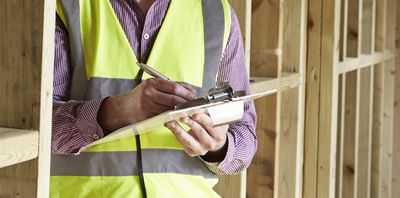
Use this checklist from the moment you discover damage:
- Note the date and cause by writing down exactly when the storm hit and what you observed afterward.
- Photograph everything from the ground, including wide shots of the house and close-ups of missing shingles, debris, and fallen limbs, but never climb onto a damaged roof.
- Photograph the interior to capture ceiling stains, wet insulation, and any water damage in the attic or living areas.
- Save weather records by taking screenshots of local news reports or National Weather Service alerts that show wind or storm activity on that date.
- Prevent additional damage by having a roofer tarp the roof if needed, and keep every receipt, since reasonable emergency repair costs can usually be included in your claim.
- Schedule a professional inspection, because a roofer’s written report and photos give the adjuster a clear, detailed picture of the damage.
- Contact your insurer promptly to report the claim, and write down your claim number for future reference.
- Be present for the adjuster’s visit, and if possible, have your roofer meet the adjuster on site so nothing gets overlooked.
- Keep a detailed claim log that tracks every phone call, email, representative’s name, and date.
- Save all receipts and invoices, since you’ll need final invoices to collect recoverable depreciation on an RCV policy.
What If Your Claim Is Denied or Underpaid?
Don’t panic if the first answer isn’t what you expected, because adjusters occasionally miss things, and estimates can leave out important items like drip edge, underlayment, or permit costs.
Here’s what you can do:
- Ask for the reason in writing, since you’re entitled to a clear explanation of the decision.
- Request a reinspection, ideally with your roofer present to point out damage.
- Submit a supplement if the estimate missed damage or materials, so your roofer can document the gaps and send them to the insurer.
- Use the appraisal process, which most policies allow when you and your insurer disagree on the amount of the loss.
- Contact the Insurance Commissioner, since the Washington State Office of the Insurance Commissioner offers free consumer assistance at 800-562-6900.
One more tip: be cautious with any contractor who offers to “cover” or waive your deductible, since your deductible is part of your agreement with your insurer, and a contractor who hides it from them can put your entire claim at risk.
Does Insurance Cover Roof Replacement in Washington Frequently Asked Questions
Does homeowners insurance cover a roof leak?
It depends on the cause. A leak caused by a sudden event, like wind tearing off shingles, is usually covered, while a leak caused by old, worn-out shingles or a long-term maintenance problem usually isn’t.
Does insurance cover wind damage to a roof in Washington?
What is recoverable depreciation on a roof claim?
How long do I have to file a roof claim in Washington?
Will filing a roof claim raise my insurance rates?
We’ll Help You Get What You’re Owed
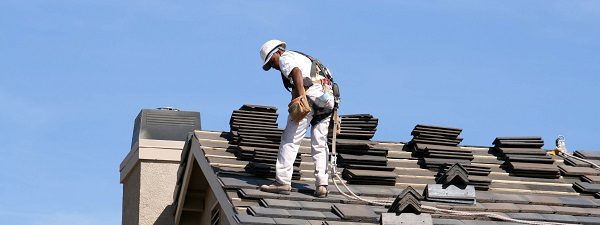
After more than 30 years of roofing in Clark County, Warner Roofing & Construction has helped many homeowners work through roof claims. We understand how stressful it is to deal with a damaged roof and an insurance company at the same time, and we’re here to take some of that pressure off your shoulders.
We work as your advocate, not the insurance company’s. Our team inspects your roof, documents every bit of storm damage with photos and a written report, and can meet your adjuster on site. If the estimate misses something, we’ll help you show what’s needed so your roof gets fixed the right way. Learn more about ourstorm damage roof repair services.
If your roof has been damaged,contact us or call 360-694-0249 to schedule an inspection. We’ll give you an honest answer about what we find, and help you get every dollar your policy owes you.