



Published on October 6, 2026
Costs, Lifespan & Why Homeowners Are Switching
Drive through just about any Vancouver neighborhood right now, and you’ll spot it: more and more homes with sleek metal roofs instead of the usual asphalt shingles. This isn’t a coincidence, and it isn’t just about looks. Homeowners in the Pacific Northwest are switching to metal roofing for reasons that make a lot of sense once you look at the numbers and the climate side by side.
If you’re on the fence, it’s probably because of one thing: the upfront price tag. That’s a fair concern, and we’re going to address it head-on. But sticker price is only half the story. Let’s walk through what metal roofing actually costs, how long it really lasts, how it holds up to our rain and wind, and why so many homeowners are deciding it’s worth it.
Why Vancouver, WA Homeowners Are Switching to Metal
A few things are driving the shift locally:
- They’re tired of replacing their roof every 20 to 30 years. Asphalt shingles just don’t last as long as people expect, especially with the moss and moisture we deal with here.
- They want something that actually handles our weather. Heavy rain, wind off the Gorge, and near-constant moss pressure are hard on a standard shingle roof.
- They’re thinking long-term. More homeowners are running the real numbers on cost per year instead of just cost per install, and metal starts looking a lot more competitive.
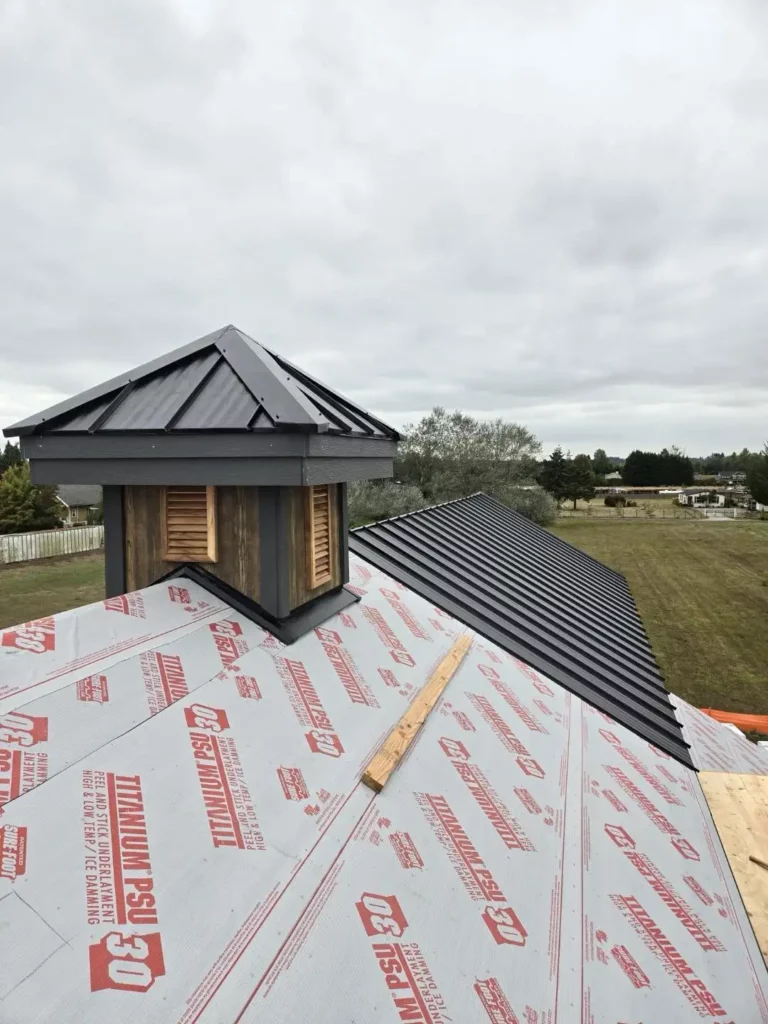
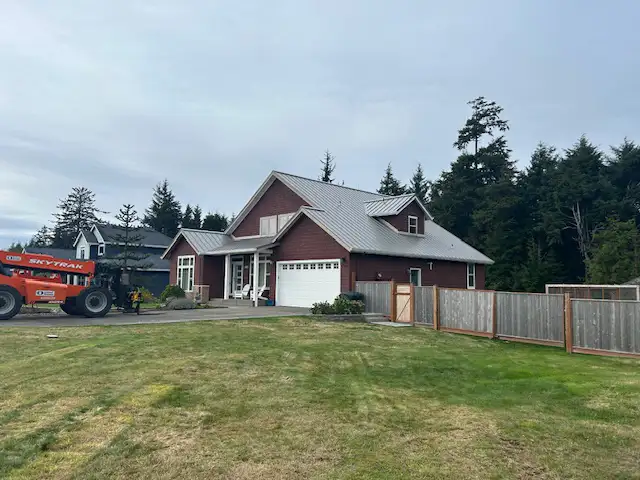
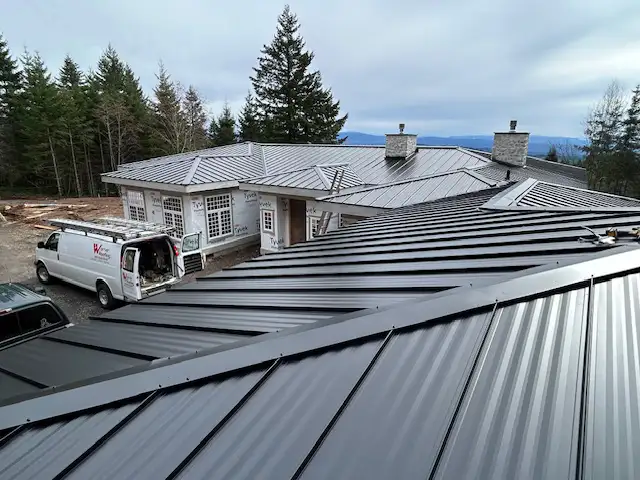
- They like how it looks. Standing seam metal roofing gives a home a clean, modern look that a lot of homeowners are drawn to when it’s time for something new.
The Real Cost of a Metal Roof in Vancouver, WA (Upfront vs. Long-Term)
Let’s get straight to the objection everyone has: metal roofing costs more upfront than asphalt shingles. That part is true. A metal roof typically runs more per square than a comparable asphalt shingle roof, and there’s no getting around that when you’re staring at two quotes side by side.
But upfront cost isn’t the whole picture, it’s just the first chapter. Here’s what a straight 50-year comparison actually looks like when you account for how many times you’ll need to replace each type of roof.
| Asphalt Shingle Roof | Metal Roof | |
|---|---|---|
| Typical upfront cost (2,000 sq ft home) | $10,000 to $25,000 | $25,000 to $65,000 |
| Average lifespan | 25 to 30 years | 40 to 70 years |
| Replacements needed over 50 years | 2 to 3 | 0 to 1 |
| Estimated 50-year total cost | $14,000 to $51,000 | $16,000 to $32,000 |
| Typical maintenance over 50 years | Periodic moss treatment, granule loss, storm repairs | Minimal, occasional inspection and minor upkeep |
(Costs reflect current 2026 national industry pricing ranges for a typical residential roof and will vary based on your home’s size, pitch, and material choice. Ask for a written estimate for numbers specific to your home.)
Here’s the plain-language version: if you install one asphalt roof today, there’s a good chance you’ll pay for it again in your lifetime, maybe twice. A metal roof installed today has a real shot at being the last roof this house ever needs. When you spread the cost out over 50 years instead of looking at day one, the gap between metal and asphalt shrinks a lot, and in some cases metal comes out ahead.

How Long Does a Metal Roof Actually Last in the Pacific Northwest?
Most metal roofing systems are built to last 40 to 70 years, depending on the material and panel type. Compare that to the 25 to 30 years you’ll typically get from an asphalt shingle roof in our climate, and you’re looking at roughly double the lifespan, sometimes more.
A few things affect where in that range your roof will land:
- Panel type. Standing seam systems tend to outlast exposed fastener panels.
- Coating and finish. A quality paint finish resists fading and chalking far longer than a basic mill finish.
- Installation quality. Even the best metal panel underperforms if it’s installed with the wrong fasteners, poor flashing, or improper overlap.
- Local conditions. Our rain, moss, and moderate freeze-thaw cycles are actually a fairly gentle environment for metal roofing compared to regions with hail or extreme heat.
Built for the Gorge: How Metal Roofing Performs in Vancouver’s Climate
This is really the heart of the decision for a lot of homeowners here. It’s not just about how a roof looks or what it costs, it’s about how it holds up to what our weather actually throws at it.
| Local Condition | How Metal Roofing Performs |
|---|---|
| 40+ inches of annual rain | Steep, smooth panel surface sheds water fast, with no granules to wash away or wear down over time |
| Moss and algae growth | Non-porous metal surface gives moss far less to grip onto compared to the textured surface of asphalt shingles |
| Columbia River Gorge wind gusts | Many standing seam systems are tested and rated for wind uplift well beyond what standard asphalt shingles can handle |
| Freeze-thaw cycles | Won’t crack, curl, or lose surface material the way aging asphalt can after repeated freeze and thaw |
Does metal roofing really resist moss better than shingles?
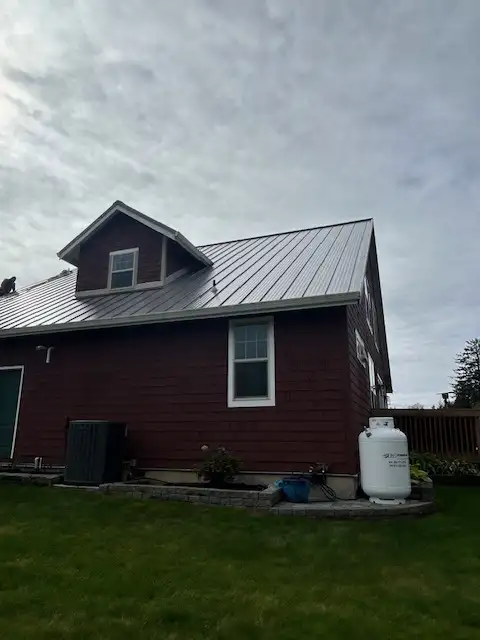
Yes, and this is one of the biggest quality-of-life differences homeowners notice. Moss needs texture and moisture retention to take hold, and asphalt shingles offer plenty of both. A smooth metal panel gives moss spores very little to anchor to, which means less scrubbing, fewer moss treatments, and less risk of moss holding moisture against your roof deck over time.
Can a metal roof actually handle Gorge-level wind?
This is one of the more common questions homeowners ask, especially for anyone who’s lived through a windstorm that peeled shingles right off a neighbor’s roof. Standing seam metal panels are mechanically fastened with concealed clips rather than exposed nails, which gives the whole system more resistance to wind uplift than a shingle roof relying on adhesive strips and nail heads alone.
Standing Seam vs. Exposed Fastener Metal Roofing: What’s the Difference?
Not all metal roofs are built the same way, and the type you choose affects both the price and the lifespan.
| Standing Seam | Exposed Fastener | |
|---|---|---|
| Look | Clean vertical panels, no visible screws | Traditional ribbed or corrugated panel look |
| Fasteners | Hidden beneath raised seams using concealed clips | Screws driven directly through the panel face |
| Typical lifespan | 50 to 70 years | 30 to 45 years |
| Typical cost | Higher | More budget-friendly |
| Best for | Homeowners who want the longest lifespan and a sleek, modern look | Homeowners balancing budget with the benefits of metal, garages, and outbuildings |
The biggest practical difference comes down to those exposed screws. On an exposed fastener roof, every single screw is a potential point where a rubber washer can dry out and crack over time, which can eventually lead to small leaks. Standing seam avoids that problem entirely since nothing punctures the panel’s face. That’s a big part of why standing seam tends to outlast exposed fastener systems, and why it’s become the more popular choice for homeowners planning to stay in their house long term.
What Metal Roofing Options Are Available for Your Home?
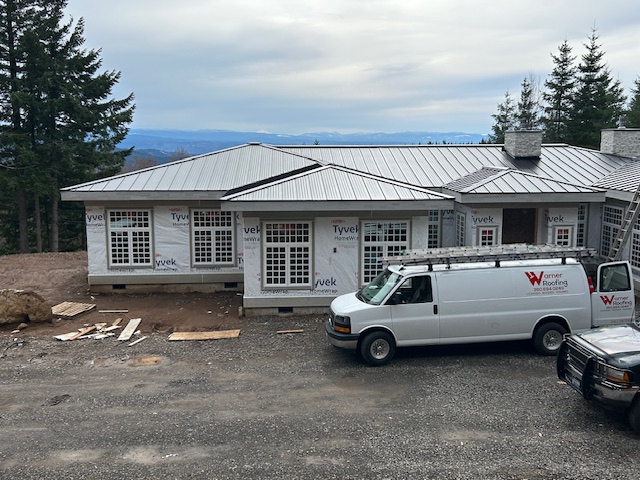
Not every metal roofing product is built the same, which is why the manufacturer behind the panel matters just as much as the panel style. Metal roofing systems from established manufacturers like Malarkey and IKO are engineered specifically for residential performance, with finishes designed to resist fading, chalking, and corrosion over decades of Pacific Northwest weather.
| Consideration | What to Look For |
|---|---|
| Panel material | Steel or aluminum with a factory-applied protective coating |
| Finish warranty | Look for coverage against fading and chipping, not just leaks |
| Gauge | Heavier gauge steel resists denting better, especially under hail or falling branches |
| Color and profile | Standing seam offers the cleanest modern look, ribbed panels offer a more traditional style at a lower cost |
Financing a Metal Roof: You Don’t Have to Pay It All at Once
The upfront cost of a metal roof is real, but it doesn’t have to mean paying the entire amount out of pocket on day one. Financing options exist specifically so homeowners can spread the investment out over time instead of draining savings or delaying a roof they actually need now.
Monthly financing can often bring a metal roof’s cost closer in line with what you’d expect to pay for a premium asphalt installation, while still getting the 40 to 70 year lifespan and lower long-term cost that comes with metal. If the upfront number is the only thing holding you back, it’s worth looking at what a monthly payment actually looks like before ruling metal out entirely.
Common Questions About Metal Roofing in Vancouver, WA
Is a metal roof actually worth it, or is it just a trend?
For most homeowners planning to stay in their house more than 10 to 15 years, metal roofing pencils out well against the cost of replacing an asphalt roof two or three times over that same period. It’s less about trend and more about doing the long-term math.
Is metal roofing noisy in the rain?
With proper solid decking and insulation underneath, a metal roof is not noticeably louder than an asphalt roof during rain. Older assumptions about noisy metal roofs usually come from open-frame agricultural buildings, not properly installed residential systems.
Does a metal roof increase home value?
Metal roofing is widely recognized as a durability upgrade, and many buyers see a long-lifespan roof as one less major expense they’ll need to plan for after moving in.
Can you install metal roofing over existing shingles?
In some cases, yes, though it depends on your roof’s current condition, local code, and structural considerations. This is worth a direct conversation with a licensed contractor rather than a blanket answer.
How do I decide between metal and asphalt for my home?
Start with how long you plan to stay in the house, then factor in your budget, your tolerance for moss maintenance, and how much the upfront cost difference matters versus the long-term savings. A written estimate for both options makes the comparison a lot easier to see clearly.
Making the Decision
Metal roofing costs more on day one, that part isn’t in dispute. But when you run the full 50-year math, factor in how few homeowners in the Pacific Northwest get a full 30 years out of asphalt without moss issues or storm damage, and add in the fact that financing can soften the upfront number, the decision looks a lot different than it does at first glance.
This is exactly why so many Warner Roofing & Construction customers end up choosing metal, especially once they see the real numbers instead of just the initial quote. We install metal roofing systems from trusted manufacturers including Malarkey and IKO, and our team can walk you through standing seam and exposed fastener options to find the right fit for your home and budget. Learn more on our Metal Roofing service page, or if you’re still deciding between a full roof replacement in metal or asphalt, we can walk you through both.
Curious what a metal roof would actually cost for your home, financing included? Request your free estimate here and get real numbers instead of guesswork.